
Troubled by (excessive) pigment spots?
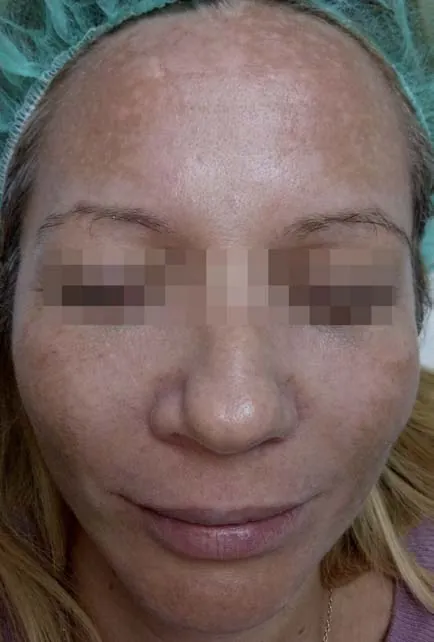
Does your skin produce excessive pigment? Are dark, irregularly shaped spots visible on your cheek, nose, upper lip and/or forehead? Are you at a loss about what to do about it? Then Benebellum Lumpeel might just be the solution for you.
What are hyperpigmentation and melasma?
When the skin produces excessive pigment and troublesome pigment spots become visible, we refer to it as hyperpigmentation. Hyperpigmentation is most common in women with a (lightly) tinted skin (skin types 4-6). Research shows that various risk factors play a role in the development of hyperpigmentation, for example genetic predisposition, sunlight, sex, age, hormones, pregnancy, thyroid disorders, medication and cosmetic products.
When the hyperpigmentation has a hormonal cause, it is called melasma (also known as the ‘pregnancy mask’). Melasma is characterised by dark, irregularly shaped spots on the cheek, nose, upper lip and/or forehead. Hyperpigmentation or melasma can be superficial (epidermal) or lie deeper in the skin (dermal), or be a combination of both.
The most common form of hyperpigmentation is the epidermal (superficial) form, in which the pigment (melanin) is spread across the epidermis. For this type of hyperpigmentation, a superficial treatment with a tranexamic acid peel (Melanostop Tranex) is usually already effective. If you have a mixed or dermal (deep-lying) form of hyperpigmentation, then a somewhat more intensive treatment with a TCA peel (Lumpeel) will be desirable (short treatment time). For sensitive, pigmented skin types (skin types 5-6) and for the most stubborn and severe pigment spots, Cosmelan is absolutely the best choice we offer. With a treatment duration of 6 months it guarantees maximum effect and prevents the return of over-pigmentation.
What causes hyperpigmentation?
The underlying cause of hyperpigmentation and pigment spots is excessive activity of the melanocytes (the pigment-forming cells). This overactivity can have various causes: not only do melanocytes (a certain type of skin cell) receive signals to produce large amounts of melanin, it can also be caused by the breakdown of collagen, abnormalities in the skin barrier, oxidative stress (an excess of free radicals) and/or sunlight (not only UVA and UVB, but also and especially HEV (High Energy Visible) light, the so-called ‘blue light’ emitted by artificial light such as from screens).
Recent research by Mc. Daniel (2018) into skin damage shows that UVA/UVB together are responsible for 5.1% and HEV for as much as 40% of all skin damage caused by radiation.
The role of tranexamic acid, hexylresorcinol, vitamins A, C, E and a blue light filter
Years of research into the cause and treatment of pigment spots, hyperpigmentation and melasma have demonstrated the effectiveness of these ingredients.
- Tranexamic acid is an amino acid that gives a ‘lightening’ effect and reduces redness caused by vascular growth.
- Hexylresorcinol is an organic substance that inhibits pigment production and has an anti-inflammatory action and a pain-relieving effect.
- Vitamins A, C and E are strong antioxidants that have an anti-inflammatory effect and stimulate cell renewal, wound healing and collagen formation. Pigment production is also inhibited by applying highly concentrated vitamin C to the skin.
- A blue light filter protects the skin against the harmful influence of HEV (High Energy Visible) light that is produced, for example, by screens and plays a large part (8x more than UVA/UVB/UVC) in the development of light-induced skin damage.
Treatment and treatment plan
Treating hyperpigmentation with Benebellum
The Benebellum product line consists of products for treatments performed by your therapist (professional) and products for home use for yourself (cosmetics). The combination of these products forms a powerful tool in the fight against hyperpigmentation and can lead to visible skin improvement.
The active ingredients mentioned above are components of the products in the Benebellum line, with which your skin is treated and protected.
What does a treatment plan with Benebellum products look like?
A treatment plan with Benebellum is tailored to a number of personal factors, such as which skin type you have, the thickness of your skin and whether the pigment lies superficially or deep in your skin.
Products for home use that are part of this treatment plan include, for example:
- a Lightening Cleanser Foam (Tx Foam)
- a highly concentrated Vitamin C serum 18% (Lumina)
- a protective day cream with active ingredients and SPF 30 or 50 (Fulgora 30/50)
- a nourishing night cream with active ingredients (Lumina Vit A+E)
In addition, your cosmetic therapist will perform a number of professional treatments. A chemical peel and the application of a solution with tranexamic acid (by means of microneedling) are part of this.
Chemical peels remove dead skin cells and cause a controlled destruction of the epidermis and/or dermis in order to stimulate it and promote the renewal of skin cells. This makes the skin more even, pigment spots diminish, pores become less visible and the skin will renew and rejuvenate itself.
Microneedling is the creation of minuscule tiny holes in the skin in combination with the application of a solution of tranexamic acid and antioxidants. Through this treatment the skin undergoes changes needed to lighten the skin.
Pigmentation treatment plans: prevention – correction – protection
Prevention plan
To prevent (further) activation of hyperpigmentation, the treatment plan consists of 4 sessions carried out every week by your therapist. Each session consists of:
- cleansing with mesoesthetic
- a superficial peel with Melanostop Tranex
- microneedling (optional)
- care with mesoesthetic
Correction plan
To treat hyperpigmentation, the treatment plan consists of 4 sessions carried out every week by your therapist. Each session consists of:
- cleansing with Tx Foam
- microneedling with Tx Solution
- a medium peel with Lumpeel (TCA peel)
- care with Fulgora 30/50 day cream
Protection plan with TCA Lumpeel
Pre and Post Peel Care (home use):
- cleansing with Tx Foam twice daily
- Lumina Vitamin C 18% serum twice daily
- Fulgora day cream SPF 30 or SPF 50 (morning)
- Lumina night cream (Vit. A+E) (evening)
What to expect
To achieve good and satisfying skin improvement, a considerable part of the epidermal cells will need to be replaced by new cells. When using Melanostop Tranex, the peeling will be minimal. When using Lumpeel (TCA), peeling is necessary and unavoidable. Between days 3 and 5 you usually peel the most.
Day 1: The day after the peel your skin feels dry but not much is visible yet.
Day 2: Your skin feels tight and dry. Dark spots may be visible in the areas where pigment was present.
Day 3: The peeling begins, first around the mouth and spreading from there. Any spots also “fall” away from your skin.
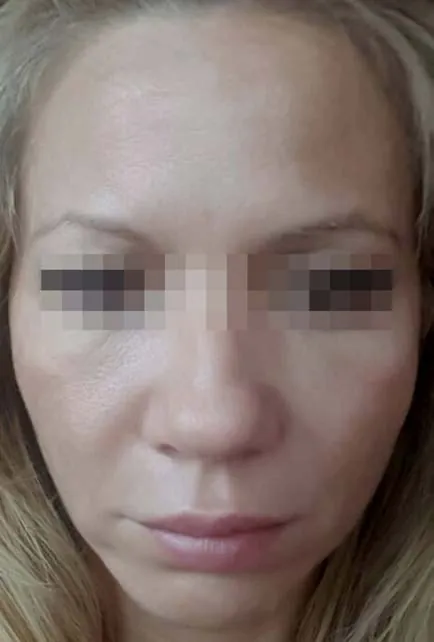
The peeling usually lasts 2-3 days. After that, only some remaining flakes at the hairline and around the nose will be visible. Your new skin is visibly improved, has become more even and glows!
Post Peel Care
Your peeled skin is vulnerable and susceptible to the re-emergence of pigment and visible pigment spots. So make sure you strictly follow the prescribed ‘Post Peel Care’.
What can I do myself for maximum results?
-
Carefully follow the Post Peel Care instructions:
– use Tx Lightening Foam Cleanser twice daily,
– Lumina Vit. C 18% Serum twice daily,
– apply Fulgora SPF 30 or 50 in the morning
– and Lumina Vit. A+E cream for the night. - Stop using your own day and night creams. These creams often contain irritating substances, such as perfumes and acids, that can lead to inflammatory reactions.
- For up to 2 weeks after a peel treatment, avoid activities in high temperatures (such as sauna, hammam, tanning bed, sunbathing).
- Don't pull at loose flakes of skin; doing so damages the new skin layer and can cause small wounds that in turn can lead to a pigment spot.
- We advise you, from the first peel session until two weeks after the last, not to use any peels or scrubs at home or undergo similar treatments at another clinic or beauty salon.

Beauty expert Chris
Fruit acid or TCA peel?
A fruit acid has a light and a TCA peel a strong ‘abrasive’ effect on your skin. The upper (epidermis) to middle (dermis) skin layer is removed and makes way for fresh new skin. How much the skin is abraded determines the type of peel. Each with their own effect and results.
A superficial fruit acid peel promotes cell renewal and removes dead skin cells. It cleanses your skin, stimulates blood circulation and gives your skin a refreshing pick-me-up. It is also suitable for treating acne and blackheads.
If you're after skin improvement or rejuvenation, or treating certain skin concerns (think pigment spots, dull skin, large pores and small scars from acne, for example), then a medium TCA peel is more effective.